Commissioning Custom: Five Essential Questions Before You Begin
The decision to commission a bespoke piece of fashion is not one that arrives casually. It tends to emerge from a specific kind of dissatisfaction—a recognition that what is available on the market, however broad and varied, does not quite address what you actually need. Perhaps the proportions are never quite right. Perhaps you have a particular occasion in mind that demands something singular. Perhaps you have simply reached a point in your relationship with clothing where you want to understand, precisely and personally, what you are wearing and why.
Whatever the origin of that impulse, the path from decision to finished garment is longer and more nuanced than most first-time clients anticipate. At Liata Vigail Design, we believe that the most successful bespoke commissions begin not with a design brief but with a genuine inquiry—a set of questions that help both client and designer determine whether the conditions for meaningful collaboration are in place.
Here are five questions worth asking before you commission your first bespoke piece.
1. What Is the Realistic Timeline for This Commission?
The single most common source of disappointment in a first bespoke experience is a mismatch between a client's timeline expectations and the reality of the design process. American consumers are accustomed to remarkable speed: two-day shipping, same-day alterations, next-week delivery on made-to-measure suits. Bespoke design operates in an entirely different temporal register.
A genuinely bespoke garment—one that involves original pattern drafting, multiple fittings, and hand-finishing—typically requires a minimum of eight to twelve weeks from the initial consultation to delivery. For more complex pieces, that timeline may extend to five or six months. This is not inefficiency. It is the natural pace of work that cannot be meaningfully compressed without compromising quality.
Before you approach a designer, be honest with yourself about your timeline. If you need a garment for an event three weeks from now, a bespoke commission is not the right solution. If you are planning for a wedding twelve months out, or investing in a wardrobe piece you intend to wear for decades, the timeline becomes an asset rather than a constraint—an opportunity for the kind of sustained attention that produces truly exceptional work.
When speaking with a prospective designer, ask specifically: How many fittings does your process typically involve, and how far apart are they scheduled? The answer will tell you a great deal about the rigor of their practice.
2. What Should I Expect to Invest, and What Does That Investment Include?
Bespoke fashion exists at a significant price premium relative to ready-to-wear, and understanding why is essential before you commit. You are not simply paying for materials and labor, though both are substantial. You are paying for a designer's creative expertise, their sourcing relationships, the time invested in consultation and revision, and the irreplaceable quality of sustained human attention applied to a single garment made specifically for you.
In the United States, entry-level bespoke commissions from established independent designers typically begin in the range of $1,500 to $3,000 for simpler pieces and can rise considerably for complex garments involving rare materials or extensive construction. Studios with significant reputations and long client waitlists may command considerably more.
Before you enter into a commission agreement, ask for a detailed breakdown of what the quoted price includes. Specifically: Are fittings included in the base price, or billed separately? Is fabric sourcing included, or are materials quoted additionally? What is the revision policy, and at what point do additional revisions incur additional cost?
A transparent designer will answer these questions readily and completely. Vagueness around pricing at the outset is a meaningful signal worth heeding.
3. How Do I Know Whether This Designer Is the Right Fit for My Vision?
Not every talented designer is the right designer for every client. Bespoke fashion is a relationship, and like any productive relationship, it requires a degree of natural alignment between the parties involved. A designer whose aesthetic sensibility is rooted in minimalist precision may not be the ideal collaborator for a client whose instincts run toward ornament and drama—and vice versa.
Before approaching a designer, spend time with their existing portfolio. Look not only at individual pieces but at the coherence of their body of work: the recurring formal decisions, the relationship to material, the way they handle proportion and silhouette. Ask yourself honestly whether you find their aesthetic compelling—not merely competent, but genuinely resonant with your own sense of what clothing can be.
When you make initial contact, pay attention to how the designer communicates. Do they ask thoughtful questions, or do they move quickly toward solutions? Do they seem genuinely curious about you and your needs, or primarily interested in the commission as a technical project? The quality of the early conversation is a reliable indicator of the quality of the collaboration that will follow.
At Liata Vigail Design, the initial consultation is as much about determining mutual fit as it is about defining the project. A commission that begins with genuine alignment between designer and client produces work that neither party could have achieved independently.
4. How Should I Communicate My Vision Effectively?
Many first-time bespoke clients arrive at their initial consultation uncertain about how to articulate what they want. This is entirely understandable—and, in a well-structured bespoke process, not actually a problem. A skilled designer is trained to draw out the information they need through conversation and observation. You do not need to arrive with a fully formed brief.
What you should bring is a degree of self-knowledge about your relationship with clothing: what you tend to feel most yourself in, what you find consistently uncomfortable or unflattering, what occasions or contexts you are designing for, and what emotional quality you want the finished piece to carry. These are not design specifications. They are the raw material from which a designer builds a design specification.
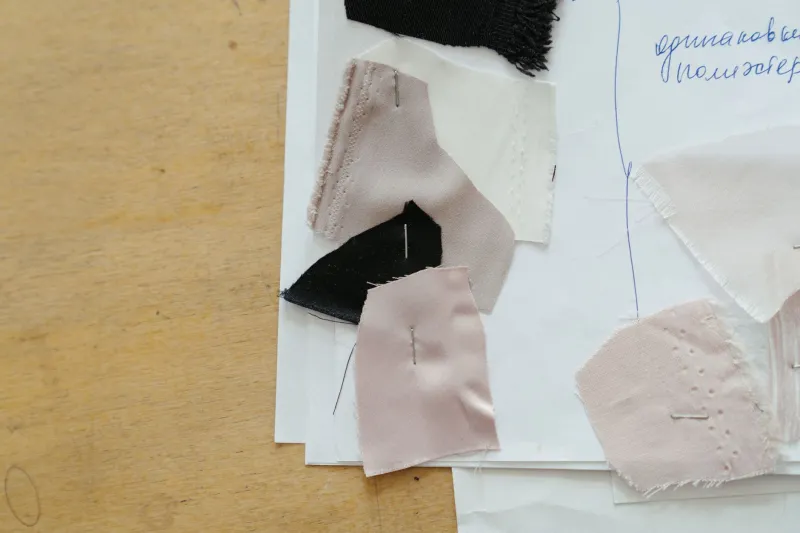
Visual references can be useful, with an important caveat: bring references that speak to a quality or mood you are drawn to, not images of specific garments you want replicated. A photograph of a fabric texture you love, a color palette that feels right, or an image of a silhouette that resonates—these are genuinely useful. A photograph of another designer's garment with the instruction to "make something like this" is a signal that the collaboration may be misaligned from the start.
Ask the designer: How do you prefer clients to share reference material, and how do you use it in your design process? The answer will help you understand how they translate client input into original design.
5. What Is the Designer's Philosophy on Revisions and Creative Direction?
The revision process is where many first-time bespoke commissions encounter their most significant friction. Clients who expect unlimited revisions at no additional cost, or who anticipate that the designer will implement every requested change without pushback, are often surprised to discover that a serious bespoke practice does not work that way.
Revision in a bespoke context is a dialogue, not a service transaction. A designer may push back on a client's request for a change if, in their professional judgment, that change would compromise the structural integrity or aesthetic coherence of the piece. This is not obstinacy—it is precisely the expertise the client is paying for. Understanding this dynamic before the commission begins prevents a great deal of frustration during the process.
Ask directly: How do you handle situations where my preferences and your professional recommendations diverge? A confident designer will answer this question honestly and specifically. They will describe a process in which client input is genuinely valued but design expertise is also genuinely respected—a balance that, when maintained well, produces work that exceeds what either party could have specified alone.
A Final Thought
Commissioning a bespoke piece is, at its best, an act of investment in yourself—in the idea that what you wear can be as considered and intentional as any other meaningful decision in your life. The five questions above are not gatekeeping mechanisms. They are tools for ensuring that when you enter into a bespoke collaboration, you do so with the clarity and preparation that allows the work to be everything it has the potential to be.
The right designer, the right commission, and the right process will produce something that is, in the truest sense, made for you—not simply fitted to your measurements, but genuinely responsive to who you are.