Where Listening Becomes Design: The Art of the First Conversation
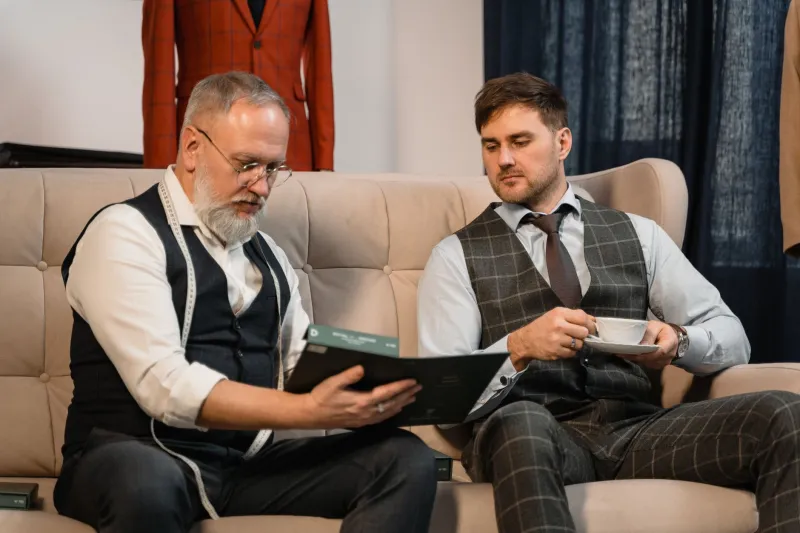
Before a single sketch is drawn or fabric is touched, something far more delicate takes place: a conversation that will quietly govern every decision to follow. At Liata Vigail Design, the client consultation is not a preliminary formality — it is the first creative act of the entire bespoke process. What unfolds in that initial meeting shapes the silhouette, the texture, the color, and ultimately the meaning of every piece that emerges from the studio.
This is the part of bespoke work that no portfolio can fully capture. It lives in the space between what a client says and what they actually mean — and learning to navigate that space is, perhaps, the most refined skill a designer can possess.
The Problem with Taking Words at Face Value
Clients arrive with language. They bring references, photographs torn from magazines, adjectives collected over months of quiet longing. They say elegant when they mean untouchable. They say simple when they mean effortless in a way that took years to understand. They say something different when they mean something that finally looks like me.
The designer who listens only to the literal words will produce something technically accurate and emotionally hollow. Bespoke design, at its highest expression, is not about executing a brief — it is about uncovering one. And that requires a particular quality of attention that goes well beyond note-taking.
At Liata Vigail Design, the consultation begins not with questions about aesthetics, but with questions about life. Where is this piece going? What does the client want to feel when they enter a room wearing it? What has never quite fit, in any sense of the word? These are not icebreakers. They are the actual work.
The Architecture of a Meaningful Consultation
A bespoke consultation, when conducted with intention, follows its own internal structure — though it rarely feels like a formal process to the client. The conversation moves through three distinct registers, each one revealing something the previous layer could not.
The Practical Layer arrives first and most naturally. Occasion, function, timeline, and budget establish the parameters within which creativity will operate. These are not constraints to be resented; they are the frame that gives a painting its tension. A garment destined for a winter gala in Chicago carries different demands than one commissioned for a destination wedding in Sonoma — and those differences are generative, not limiting.
The Aesthetic Layer follows, and this is where visual references enter the room. But rather than treating a mood board as a prescription, Liata Vigail treats it as a symptom. What pattern does the client keep returning to? What do they consistently exclude? Sometimes the absence of something — no color, no structure, no ornamentation — speaks more clearly than any image they've chosen to include.
The Identity Layer is the most intimate, and the most essential. This is where the designer listens for who the client is in the process of becoming, not merely who they are today. Bespoke work, by its nature, exists slightly ahead of the present moment. A commissioned piece will be worn into a future that hasn't fully arrived yet — a promotion, a milestone, a reinvention. The most powerful consultations make space for that forward motion.
Silence as a Design Tool
One of the least discussed but most important elements of a skilled consultation is the willingness to sit with silence. American professional culture tends to treat pauses in conversation as problems to be solved, gaps to be filled. In the context of bespoke design, silence is often where the most honest answers live.
When a client pauses before answering a question about how they want to feel in a piece, that pause is not hesitation — it is consideration. It signals that something real is being accessed. A designer who rushes to fill that silence with suggestions or options forecloses the very insight they were trying to invite.
The practice of holding space, of asking a question and then genuinely waiting, is a discipline. It requires the designer to resist the instinct to demonstrate expertise and instead remain curious. Curiosity, in this context, is not passive. It is the most active form of attention available.
Reading What Isn't Said
Beyond words and silences, the consultation offers a third channel of communication: the client's relationship to their own body, to physical objects, and to the act of being seen.
How does someone move through the studio? Do they touch the fabric samples immediately, or do they observe from a distance before approaching? Do they speak about themselves directly, or do they describe what they want through the lens of how others will perceive them? These small observations accumulate into a portrait that no questionnaire could produce.
A client who consistently deflects questions about her own preferences in favor of what will be "appropriate" is communicating something profound about her relationship to self-expression. A client who arrives with an extraordinarily detailed vision but struggles to commit to any single direction may be working through something larger than fabric selection. The designer is not a therapist — but the most accomplished bespoke practitioners understand that design decisions are rarely purely aesthetic. They carry weight.
Translating the Intangible Into the Tangible
The final act of any consultation is translation: taking everything that has been heard, observed, and intuited, and rendering it into a design brief that the studio can actually work from. This document is not a transcript of the conversation. It is an interpretation of it.
At Liata Vigail Design, the brief captures not just specifications but intentions. It notes the emotional register a piece should inhabit, the references that resonated most deeply, and — crucially — the things the client moved away from. It records the version of themselves the client is reaching toward, so that every subsequent decision in the studio can be measured against that north star.
This is why the consultation cannot be rushed, abbreviated, or treated as an administrative step before the real work begins. It is the real work. Everything that follows — the draping, the construction, the fittings — is an act of translation. But the original text is written in that first conversation, in the pauses and the references and the unfinished sentences that a skilled designer learns, over time, to read.
The Studio That Listens First
Bespoke design, at its most intentional, is an act of profound attention. It asks the designer to set aside the impulse to impose and instead develop the capacity to receive. That is a harder discipline than technical mastery, and a rarer one.
At Liata Vigail Design, the consultation is treated as the threshold of every project — not because it precedes the creative work, but because it is the creative work in its most essential form. What is designed in that first conversation shapes not just the piece, but the relationship between maker and client, and ultimately, the meaning that a finished work carries into the world.