Built to Be Inherited: The Design Philosophy Behind Pieces That Outlive Their Makers

There is a particular kind of ambition that does not announce itself loudly. It does not chase a runway season or position itself against a trending color palette. It simply endures. In the world of bespoke design — where every seam, silhouette, and surface is considered before it is committed — the highest aspiration is not beauty for this moment, but beauty that survives every moment that follows.
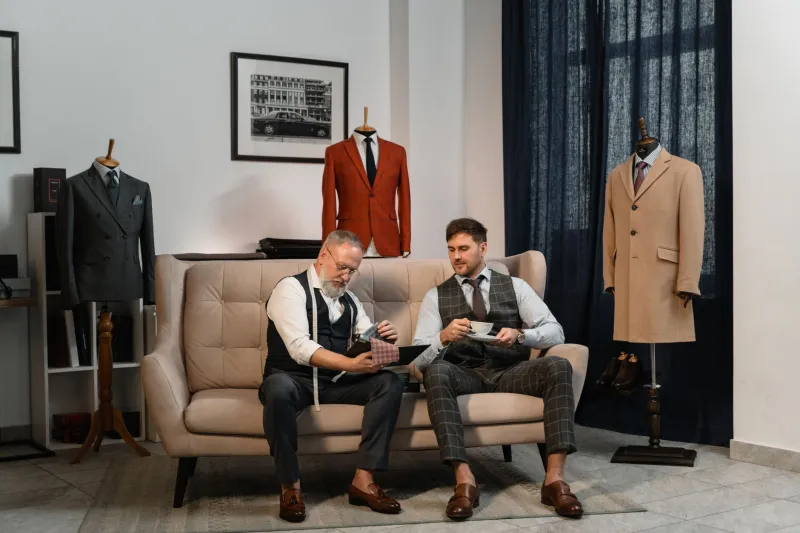
At Liata Vigail Design, the question of longevity is not an afterthought. It is, in many ways, the first question. Before a commission advances beyond conversation, the studio considers whether the piece being envisioned has the structural and conceptual integrity to become something a client's daughter might one day wear — or display, or hold — with the same reverence its original owner felt when it was first placed in their hands.
This is the heirloom paradox: designing for permanence within a culture that profits from impermanence.
The Difference Between Timeless and Dateless
One of the most persistent misconceptions in fashion and design circles is that timeless simply means without date — stripped of any marker that might anchor it to a particular era. In practice, this approach often produces work that feels generic rather than enduring. Truly heirloom-quality design does the opposite. It is deeply intentional about when it was made, encoding the values, craftsmanship standards, and aesthetic vocabulary of its moment without surrendering to that moment's passing whims.
Consider the difference between a garment constructed in response to a micro-trend and one commissioned with a specific life story in mind. The former is reactive. The latter is declarative. When a client approaches a bespoke studio with a vision tied to a milestone — a milestone anniversary, a professional achievement, a cultural celebration — the resulting piece carries biographical weight. That weight is precisely what makes it worth keeping.
Designers working in the heirloom tradition speak frequently about restraint as a creative discipline. Embellishment is not avoided, but it is earned. Every decorative choice must justify its presence not only in the context of today's wardrobe but in the context of a life not yet fully lived.
Material Choices as Commitments
No design philosophy survives poor material selection. For a piece to be passed down with pride, it must be constructed from textiles and components capable of aging with grace rather than simply aging. This distinction — between graceful aging and deterioration — is one that separates studios operating with an heirloom mindset from those focused primarily on immediate presentation.
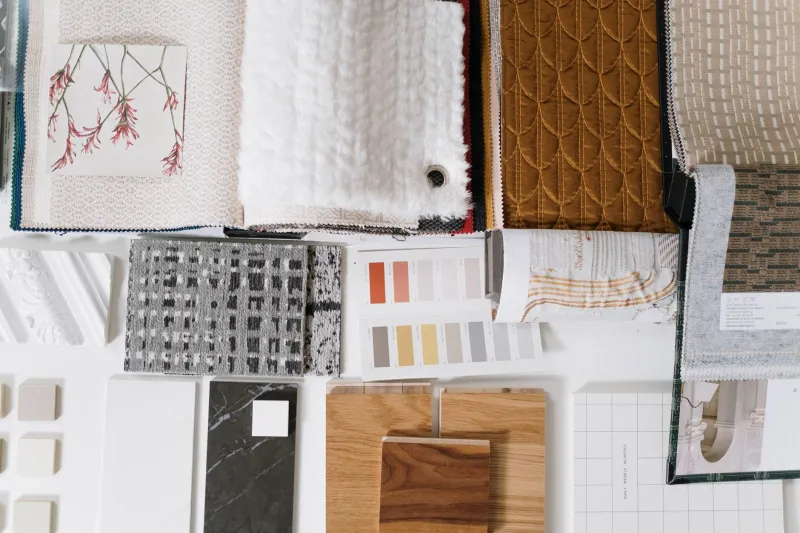
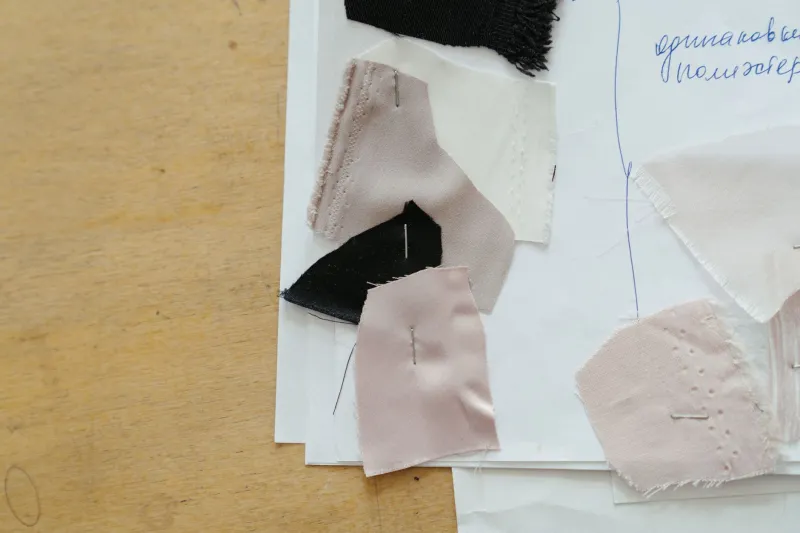
Natural fibers with long track records of structural integrity — fine wool, silk charmeuse, tightly woven linen, and full-grain leather — remain the foundation of heirloom-oriented work. These materials do not merely tolerate time; they often improve under it. A well-maintained silk blouse from the 1960s carries a luster that modern synthetics cannot replicate. A hand-stitched leather belt, properly conditioned across decades, develops a patina that tells its own story.
Hardware, closures, and lining choices receive equal scrutiny in studios committed to longevity. A zipper that fails in five years is not a minor inconvenience — it is a failure of design intention. For this reason, many bespoke practitioners favor traditional closures: hand-worked buttonholes, hook-and-eye fastenings, and interior construction techniques that allow for future alteration without compromising the garment's structural integrity.
The ability to alter a piece for a different body — a daughter who stands three inches taller, a son who carries his weight differently than his father — is itself a design feature. Generous seam allowances and thoughtfully placed construction points are among the quietest indicators that a designer built something meant to last beyond its first owner.
Storytelling as Structural Element
Collectors and inheritors of bespoke pieces consistently cite one factor above all others when describing what makes a received object feel precious rather than merely old: they know its story. They know who commissioned it, and why. They know what occasion it marked, what emotion it carried, what conversation preceded its creation.
This narrative dimension is not incidental to heirloom design — it is foundational. A garment without context is a garment without legacy. When a client works with a studio that asks meaningful questions about the commission's purpose, the piece that emerges is already embedded with meaning that transcends its physical form.
At the conclusion of a commission, some studios provide clients with written documentation of the design process: the materials sourced, the construction choices made, the fittings attended, the decisions reconsidered. This record becomes part of the piece itself. Tucked into a cedar chest or folded into the lining of a garment bag, it transforms a beautiful object into a biographical document.
Families who have received bespoke pieces as inheritance speak about this documentation with particular tenderness. Knowing that a grandmother chose a specific silk because it matched the light in her dining room, or that a grandfather requested a particular lapel width because it echoed a suit he admired in his youth, makes the object irreplaceable in ways that no reproduction could be.
Designing Against Obsolescence
The commercial fashion industry is structurally dependent on obsolescence. Trends must cycle, wardrobes must refresh, and consumers must be persuaded that last season's choices are no longer adequate. Bespoke design, by its very nature, operates outside this system — but only if the designer actively resists its gravitational pull.
Designing against obsolescence requires a willingness to disappoint clients who arrive with requests rooted in the current moment rather than in their own enduring aesthetic. It requires the confidence to counsel a client away from a silhouette that flatters the zeitgeist but will read as dated within a decade. It requires, in short, a form of advocacy that prioritizes the client's long-term relationship with a piece over the immediate satisfaction of delivering exactly what was requested.
This is not a comfortable position for any designer to occupy. But it is the position that heirloom work demands.
The studios and designers who have built reputations for creating pieces that endure share a common characteristic: they treat each commission as a responsibility rather than a transaction. They understand that they are not simply making something for the person sitting across from them. They are making something for everyone that person loves — and for everyone those people will love in turn.
The Quiet Legacy of Intention
In the end, what distinguishes a piece destined to become an heirloom from one destined for a donation box is not price, not prestige, and not the name of the designer who created it. It is intention — sustained, disciplined, and generous intention applied at every stage of the design process.
When a studio asks not only what do you want but who is this for and what should it mean in thirty years, the work that results carries a different quality. It is quieter, perhaps, than work designed to dazzle in the immediate term. But it is also deeper. And it is, in the truest sense of the word, designed to last.