What Your Fabric Says Before You Speak: The Art of Textile Selection in Bespoke Design
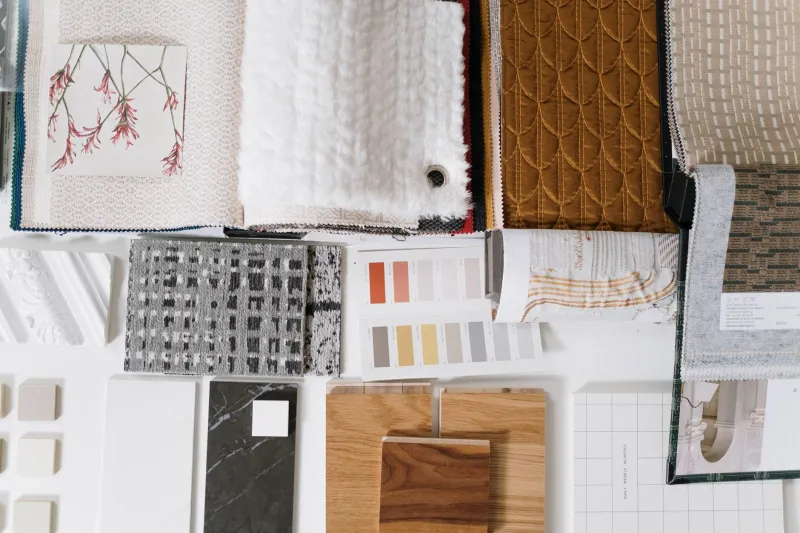
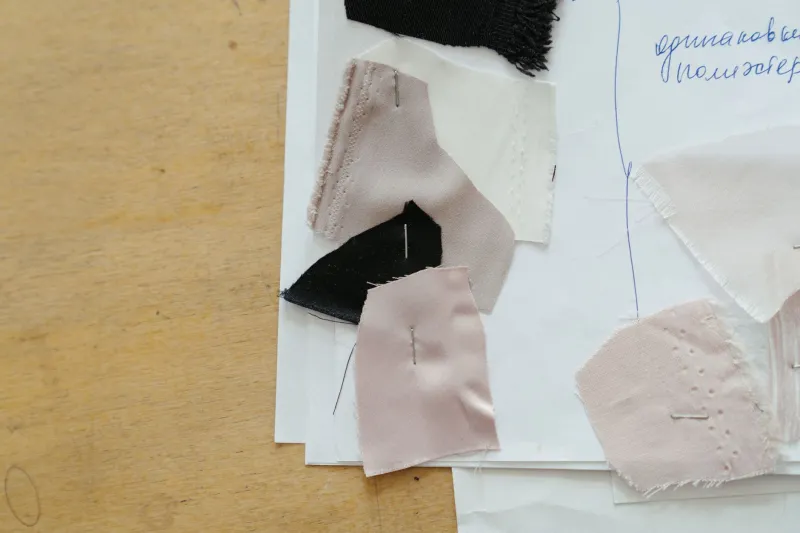
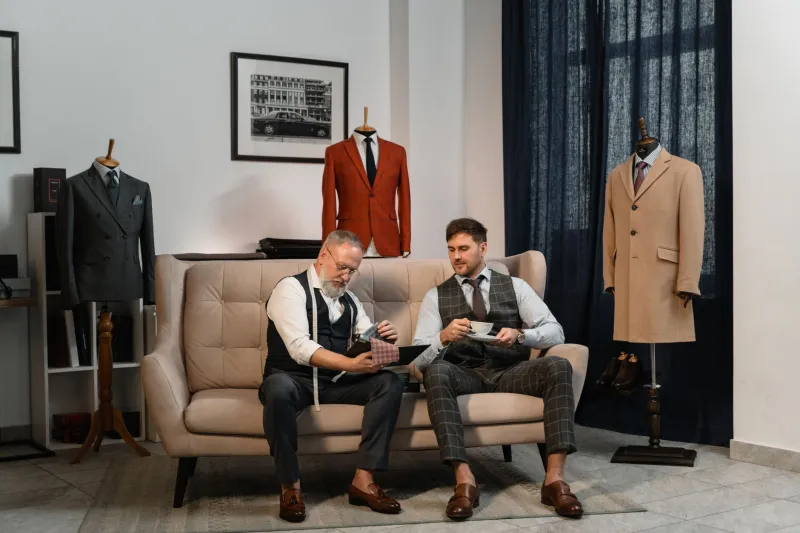
In bespoke design, the conversation between a client and a designer rarely begins with sketches. More often, it begins with touch — the weight of a linen, the drape of a silk charmeuse, the quiet authority of a double-faced wool. Long before a single seam is sewn, the fabric itself has already begun telling the story of the finished piece.
At Liata Vigail Design, textile selection is not a secondary consideration. It is, in many ways, the primary one. The choice of material determines not only how a garment looks on a body, but how it moves, how it ages, how it feels against skin at the end of a long evening. It is the difference between a piece that endures for decades and one that loses its character after a single season.
The Overlooked Vocabulary of Cloth
Most clients arrive with a clear sense of what they want a finished piece to look like. They bring photographs, mood boards, references clipped from magazines. What they often haven't considered — and what the best bespoke designers help them discover — is what they want the piece to feel like to inhabit.
Fabric communicates in a language that is partly sensory and partly cultural. A garment cut from a heavy, unstructured Japanese selvedge denim carries a different set of social and aesthetic signals than the same silhouette rendered in a crisp Italian cotton poplin. Neither is superior. But each says something distinct, and a designer's role is to help a client understand what they are, in effect, choosing to say.
This is particularly relevant in the American context, where dress codes have grown increasingly fluid over the past two decades. The boundaries between formal and casual, between professional and personal, have blurred in ways that make textile selection both more complex and more expressive than it once was. A bespoke blazer intended to move between a board meeting and a gallery opening demands a fabric with remarkable range — structured enough to read as authoritative, yet possessing a softness that allows it to feel at ease in less formal settings.
When Unexpected Materials Elevate the Work
Some of the most compelling outcomes in bespoke fashion emerge when a designer proposes a material the client would never have considered independently.
Consider the case of a client who came to the studio seeking a formal evening coat — her initial instinct was toward a traditional black duchess satin. After discussing her lifestyle, her existing wardrobe, and the range of occasions she intended the coat to serve, a different direction emerged: a midnight-blue boiled wool with a subtle surface texture, finished with hand-sewn silk organza at the lapels. The result was a piece with far greater versatility and a visual depth that a conventional satin simply could not have achieved. The wool's matte quality allowed the organza detail to read as genuinely luxurious rather than expected.
In another instance, a client commissioning a structured day dress for a series of professional engagements arrived fixed on a wool crepe. After reviewing fabric samples together, she was introduced to a deadstock Italian wool-silk blend — lighter in weight, with a gentle luminosity that the straight crepe lacked. The final garment photographed beautifully, traveled without wrinkling, and became, by her own account, the most-worn piece in her wardrobe. The slight departure from her original vision made all the difference.
These outcomes are not accidents. They are the result of a designer who understands the full range of available materials and a client who is willing to remain open during the selection process.
The Sourcing Process: What Happens Behind the Studio Door
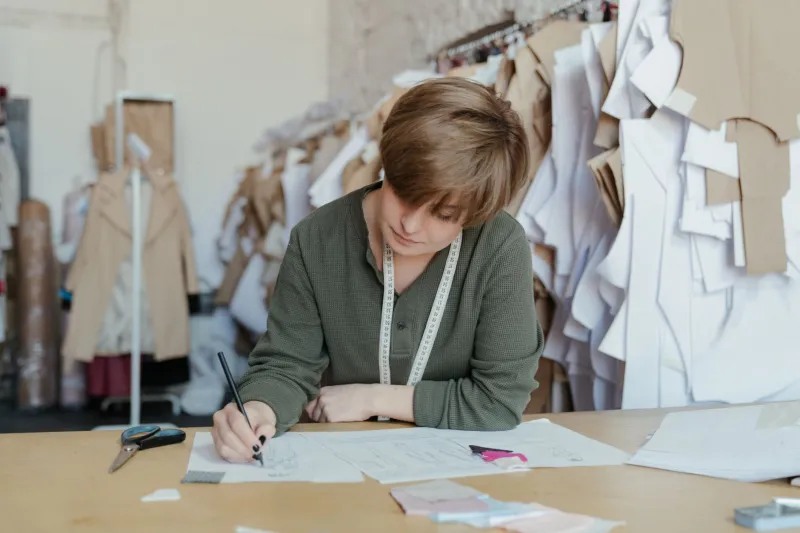
For clients unfamiliar with the textile industry, the sourcing process can feel opaque. In practice, a bespoke designer draws from a combination of established mill relationships, specialty importers, and — increasingly — curated deadstock suppliers who offer limited runs of exceptional fabrics that would otherwise go unused.
Mill relationships matter enormously. A designer with longstanding connections to mills in Italy, Japan, the United Kingdom, or the American South has access to materials that simply do not appear in commercial fabric stores. These relationships also provide context: a mill representative can speak to the behavior of a cloth over time, how it responds to cleaning, whether it tends to pill or relax with wear. That knowledge shapes the designer's recommendation in ways that a purely visual assessment cannot.
Deadstock sourcing has grown in significance in recent years, both for environmental reasons and because it frequently surfaces remarkable materials. Deadstock refers to fabric produced for one purpose — often for a major fashion house or a now-discontinued product line — that was never used and has since become available through secondary channels. These materials are often of exceptional quality, produced in limited quantities, and carry a built-in exclusivity that aligns naturally with bespoke work.
Questions Every Client Should Ask
Participating meaningfully in textile selection requires a degree of preparation. Clients who arrive with thoughtful questions tend to leave with stronger outcomes. The following are worth raising in any initial consultation:
How will this fabric age? Some materials improve with wear — certain linens soften beautifully, some wools develop a gentle patina. Others are less forgiving. Understanding the long-term behavior of a cloth is essential to evaluating whether it suits your expectations for the piece.
What are the care requirements? Dry-clean-only fabrics are appropriate for some wardrobes and genuinely impractical for others. This is a functional question, not a compromise — the right answer depends on how you live.
Does this material suit the construction method? Not every fabric behaves well with every technique. A very loosely woven cloth may not support the hand-tailoring details that make bespoke work distinctive. Your designer should be able to explain the relationship between fabric choice and construction approach.
Are there alternatives at different price points? Bespoke design operates across a wide range of budgets. A skilled designer can often identify a fabric that achieves a comparable aesthetic effect at a more accessible price — or, conversely, can articulate precisely why a more significant investment in material is warranted for a particular project.
What do you love about this fabric? It is entirely reasonable to ask your designer why they are recommending a specific material. Their answer will tell you a great deal about their design philosophy and their understanding of your vision.
Fabric as Collaboration
The most successful bespoke relationships treat textile selection as a genuine dialogue rather than a directive from designer to client or, conversely, a simple execution of the client's stated preference. Each party brings knowledge the other lacks. The client understands their life — their schedule, their body, their relationship to clothing. The designer understands the materials and what they are capable of.
When that exchange is honest and unhurried, the resulting fabric choice tends to feel inevitable in retrospect. The cloth and the design appear to have been made for each other — which, in the best cases, is precisely what happened.
At Liata Vigail Design, we believe that bespoke work earns its name not merely through custom construction, but through the quality of attention brought to every decision along the way. Fabric selection is where that attention begins.