What You Are Actually Paying For: The True Accounting Behind Bespoke Design
There is a moment that occurs in nearly every bespoke design consultation. The client has described their vision with care. The designer has listened, asked questions, taken notes. Then the estimate arrives, and the room—or the inbox—goes quiet.
The number is higher than expected. It is almost always higher than expected.
What follows that silence matters enormously. For some clients, the figure prompts a genuine inquiry: What, exactly, am I paying for? That is a fair question. It deserves a thorough, honest answer—not a defensive one.
The Hours No Invoice Fully Captures
Bespoke design does not begin when the first sketch is drawn or the first fabric swatch is ordered. It begins long before any tangible work appears. It begins in conversation.
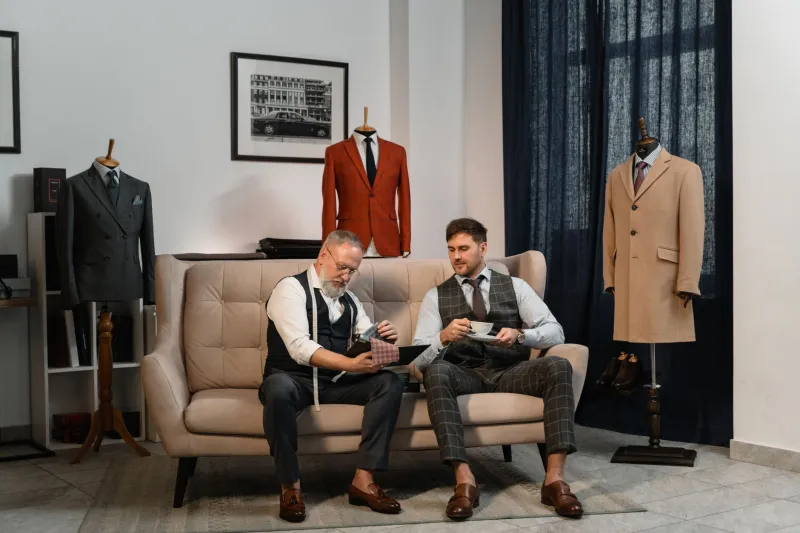
A single client engagement at a studio like Liata Vigail Design may involve two or three consultations before a single creative decision is confirmed. Those sessions are not incidental. They are the foundation upon which everything else is built. A designer who rushes through discovery to reach execution is not practicing bespoke work—they are practicing approximation.
Consider what those early hours actually contain: active listening, the translation of abstract preferences into concrete creative language, the identification of what a client means versus what they say, and the quiet work of determining whether a given vision is achievable, advisable, or in need of gentle redirection. That last skill—knowing when to guide rather than simply comply—is among the most valuable a designer can possess. It is also among the most difficult to develop. You are paying for years of experience distilled into a single conversation.
Beyond consultation, there is research. There is sourcing. There is the procurement of materials that meet a specific standard, often from suppliers who do not operate at mass-market scale or pricing. There is correspondence, coordination, revision, and the ongoing management of a project that has no off-the-shelf solution because it was never meant to have one.
The Studio Itself Is Part of the Product
Maintaining a selective, intentional studio is not inexpensive. This is a reality that rarely enters the client's frame of reference, but it is central to understanding bespoke pricing.
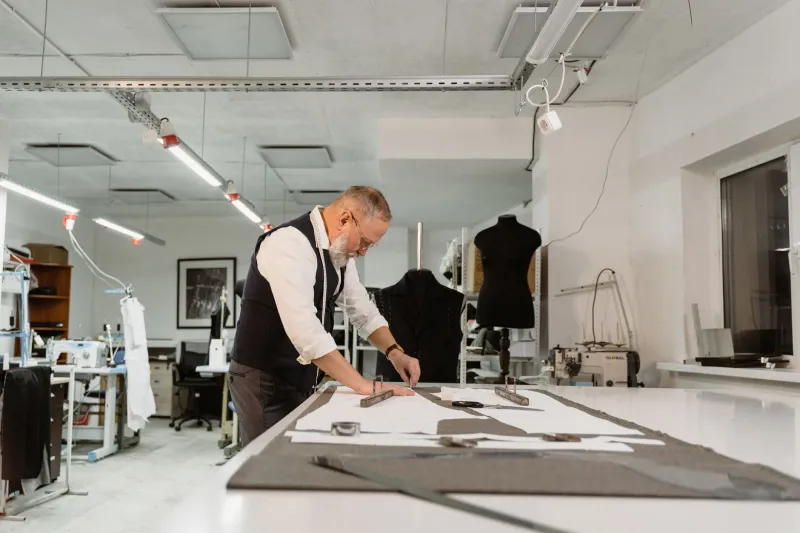
A studio that takes on limited commissions by design—because quality demands it—cannot offset overhead through volume. Every operational cost, from the workspace and its tools to professional development, insurance, and the time required to vet and maintain supplier relationships, must be distributed across a smaller number of projects. That distribution is not arbitrary inflation. It is arithmetic.
There is also the cost of what the studio does not do. A bespoke practice that turns away projects misaligned with its capabilities or values is protecting the integrity of every project it accepts. That selectivity has a price. It means slower growth, a more constrained client roster, and a deliberate resistance to the kind of scale that would compromise the work. When you commission a bespoke piece, you are partly funding a studio's commitment to remain the kind of studio worth commissioning.
Craft at the Scale of One
Manufacturing economics are built on repetition. The more times a process is repeated, the lower the per-unit cost. A garment produced in a run of five thousand is structurally cheaper than one produced in a run of one—not because the materials differ, but because the labor, the setup, the problem-solving, and the quality control are all amortized across thousands of identical outcomes.
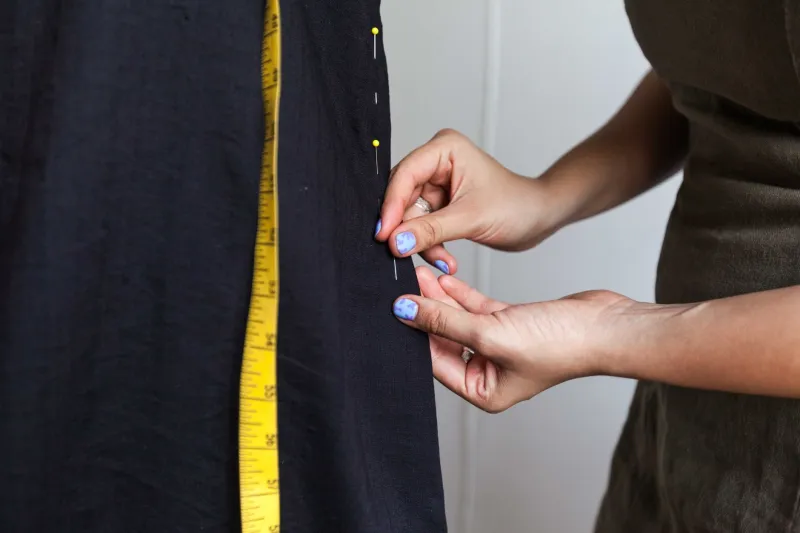
Bespoke work inverts this entirely. Every commission is, in effect, a first run. There is no template to fall back on, no prior iteration to reference for efficiency. Each piece requires its own pattern, its own fitting process, its own resolution of unexpected challenges. The hand that guides a needle through a one-of-a-kind garment is not moving faster because it has done this exact thing before. It is moving with the particular care that novelty demands.
This is not inefficiency. It is the defining characteristic of the work. You are not paying a premium despite the labor intensity—you are paying because of it.
Materials That Cannot Be Substituted
Bespoke design at any serious level of quality involves a commitment to materials that are not selected for cost convenience. In fashion, that may mean hand-loomed textiles sourced from small American mills or imported from producers who have spent generations perfecting a single weave. In interior design, it may mean hardware that is cast rather than stamped, or upholstery fabric with a thread count and hand-feel that simply cannot be replicated at a lower price point.
These choices are not decorative indulgences. They are structural decisions that determine how a piece performs over time, how it ages, and whether it remains worth keeping a decade from now. The material cost embedded in a bespoke commission is not padding—it is the physical manifestation of a promise about longevity.
A client who compares a bespoke quote to a ready-made price is, in effect, comparing two different products. One is designed to exist. The other is designed to endure.
Reframing the Conversation Around Value
The word expensive implies that something costs more than it is worth. That framing is worth examining carefully before applying it to bespoke work.
What bespoke design offers is not simply an object or an outcome. It offers a process—one that centers the client's specific context, needs, and vision in a way that no standardized product can replicate. It offers accountability: a designer who is answerable to one person, not to a production schedule or a retail buyer. It offers the kind of revision and refinement that only becomes possible when a project is not one of hundreds moving through a pipeline simultaneously.
It also offers something harder to quantify but no less real: the experience of being genuinely heard by a creative professional whose entire practice is organized around doing right by the people who commission them.
None of that is inexpensive to provide. None of it should be.
A Note to Prospective Clients
If you are considering a bespoke commission and the pricing gives you pause, the most useful thing you can do is ask questions. A studio that practices transparency—as any serious bespoke practice should—will welcome the inquiry. Ask how the estimate was constructed. Ask what the process involves. Ask what is included and what is not.
What you will likely find is not a number inflated by prestige or mystique, but one that reflects the honest cost of doing this particular kind of work with the care it requires. That understanding does not obligate you to proceed. But it does change the nature of the decision—from a reaction to a price, to a considered assessment of what you value and what you are prepared to invest in order to have it.
Bespoke design is not for every budget. It was never meant to be. But for those who choose it with clear eyes, the price is not the obstacle. It is the first indication that the work is real.